

How Long Dose It Have To Be A Make Up Person How Long Does It Have To Be A Makeup Person
Ask us about COVID-nineteen: What questions do you have nigh the coronavirus and vaccines?
This is ane of a series of manufactures in which reporters from WHYY's Health Desk Help Desk answer questions about vaccines and COVID-xix submitted past you, our audition.
A persistent cough. Waves of fatigue. The inability to olfactory property if the milk has gone bad. These are just a few COVID-nineteen symptoms that tin can linger for weeks or months after an initial coronavirus infection. Though they may not e'er amount to the debilitating cases of long COVID that tin get out people bedridden or unable to perform daily functions, it'southward very common for recovery from COVID infections to take weeks.
With record numbers of Americans contracting the virus during the contempo omicron surge have come record numbers of Americans recovering from COVID-nineteen. And that might not e'er happen as apace as we've been led to expect.
- WHYY thanks our sponsors — go a WHYY sponsor
"There could be more to help people understand that it's not always a quick bounce dorsum right away after the initial infection," said Dr. Ben Abramoff, director of the Postal service-COVID Cess and Recovery Clinic at Penn Medicine in Philadelphia. "This is notwithstanding a very pregnant viral infection, and sometimes it's only a more gradual recovery procedure than people'south previous viral illnesses."
COVID symptoms that last for weeks may come up as a surprise to some, especially after recent messaging from health authorities. In December, the Centers for Disease Command and Prevention announced that those who tested positive for the virus can get out isolation after just v days if they are symptom-free and go on to wear masks.
That recommendation is understandably focused on the flow during which someone is contagious, and, as a result, doesn't mention annihilation almost longer-lasting or recurring symptoms that might keep after the person is no longer infectious. But information technology can have the effect of suggesting that, for most people, the recovery procedure is, if not five days, pretty quick.
That'southward the message information technology sent to me, at least.
Managing my expectations
I've been reporting on COVID-nineteen since the pandemic started, and I thought I knew what an infection would be similar for a immature, otherwise healthy person like me. I knew there was a chance for long COVID, fifty-fifty with mild cases, only in my mind, there were two types of COVID: run-of-the-factory cases that didn't last much longer than their isolation periods required, and long COVID, which was relatively rare.
- WHYY thanks our sponsors — get a WHYY sponsor
Like so many Americans, I got COVID over Christmas. I was vaccinated and boosted, and my case was indeed balmy: sore throat, sinus pressure and headache, extreme fatigue. Later viii days, I was feeling better, and I tested negative two days in a row on a rapid antigen test. I was anxious to get dorsum out into the world. Most people I know were all the same lying depression to avoid an omicron infection, just I was armed with a bit of extra immunity, making me a low-adventure hang. Party time!
Not quite. Soon after catastrophe my isolation, I had dinner at a friend's house. One glass of vino left me feeling the next day like I'd had a whole canteen (merely guessing what that might feel like). I was bone-achingly exhausted, but couldn't sleep that night.
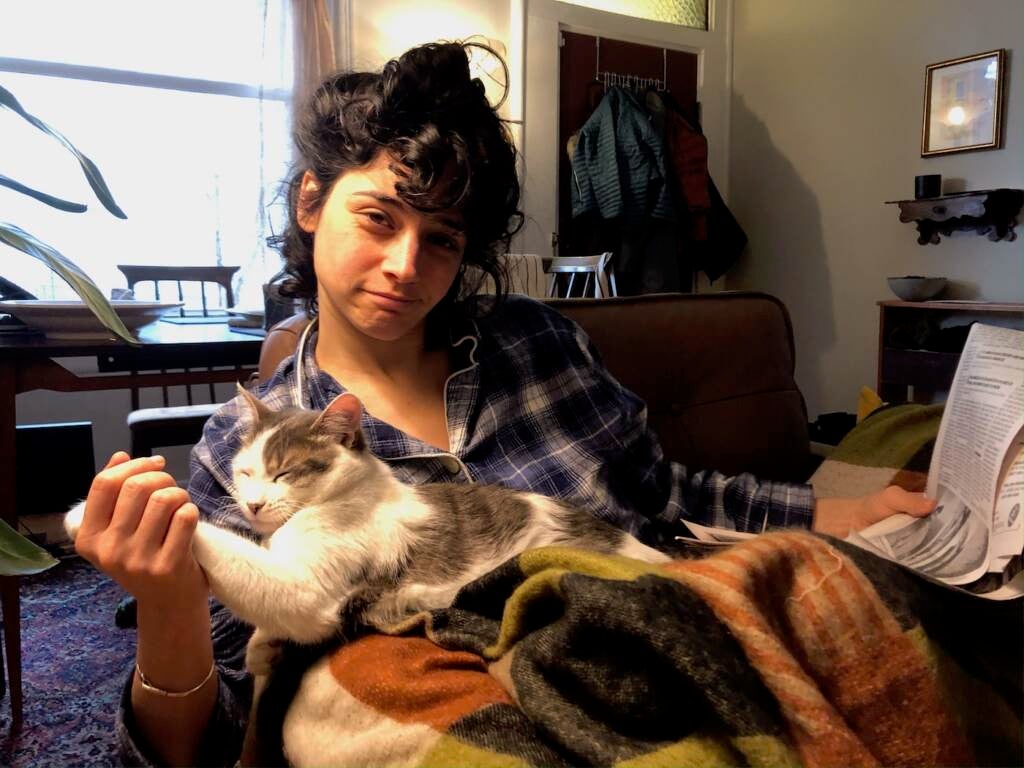
In the days and weeks that followed, as I managed the insomnia, I was also contending with bouts of fatigue, brought on past concrete activities that are usually easy and even energizing for me: going for a long walk in the cold; riding an exercise bike; taking a sauna. The waves of fatigue, which I started calling "crashes," feel like I'yard coming downwardly with a sickness in real time: weakened muscles, trunk aches, that feeling where all you tin can practice is prevarication downwards. The crashes concluding for a couple days, I recover slowly, and the cycle inevitably repeats when I accidentally push myself beyond my new and unfamiliar limit.
How doctors define long COVID, and what it means for treatment
Since it opened in June 2020, Abramoff has seen about 1,100 patients at the Penn Mail service COVID clinic. He said in that location is no official threshold at which someone officially becomes a long COVID patient. If people have just been feeling bad for a few weeks, he considers that to be the tail finish of the affliction itself. The clinic isn't really in the business of treating COVID in its acute phase.
For those dealing with symptoms for months, the dispensary takes a comprehensive arroyo, evaluating patients and referring them to specialists who can address their particular needs: a pulmonologist for breathing difficulty, a speech pathologist for someone struggling with cognitive issues, even social workers or other support staff who can help people navigate taking time off work and accessing various inability benefits.
Just then in that location is that awkward gray area: people who have been feeling bad for half dozen or 8 weeks subsequently their initial infection. Abramoff said those people will likely get better on their own if they take information technology like shooting fish in a barrel, though if they don't, there is some value in beginning work with them early. For people in that position, his best advice is to take a "watchful waiting" arroyo: Keep the lines of communication with a primary care physician open up, and be very conscientious about not rushing dorsum to life as normal.
"You lot have got to build based on your tolerance," he said. "People were very sick, even if they weren't in the infirmary."
It's hard to pin down merely how common long COVID is because various studies attempting to measure that define the disorder differently. The most conservative findings estimate that between 3% and 11% of people who had COVID connected to experience symptoms 12 weeks after initial infection. Another contempo study found that xxx% of people with mild disease had persisting symptoms ix months after initial infection. Some large meta-analyses have plant even greater proportions of people deal with lasting symptoms, though many of the studies they clarify focus mostly on patients who had been hospitalized with COVID-xix. Information technology goes without saying that the shorter the time menstruation mail-infection, the greater the percent of people still dealing with symptoms.
In Pennsylvania, more 860,000 people take tested positive for COVID-19 since the starting time case of omicron was detected in the commonwealth, according to New York Times information. That number does not include people like me, who just ever tested at home and never reported our results. If 3% of those people experienced symptoms lasting more than than 12 weeks, that would hateful most 26,000 people. If it's xxx%, that's well-nigh 260,000 people.
Aside from amounting to thousands of people who still feel bad and whose normal activities might be limited, those numbers tin can add together upwardly to have meaningful affect on the economy. Contempo enquiry from the Brookings Institution estimated that lasting COVID symptoms could exist responsible for up to 15% of the unfilled jobs in America's labor market.
Doctors and researchers agree that it'southward too before long to predict exactly how common lasting symptoms for omicron volition exist. Abramoff said that since most of the most enduring and extreme cases of long COVID at his clinic seem to exist in people who suffered the most severe disease and hospitalizations, he'southward hopeful omicron will bring fewer incidents of long COVID. Still, lasting COVID symptoms can come up from balmy illness, and those who are vaccinated tin can also get long COVID.
Adjusting to 'medium' COVID
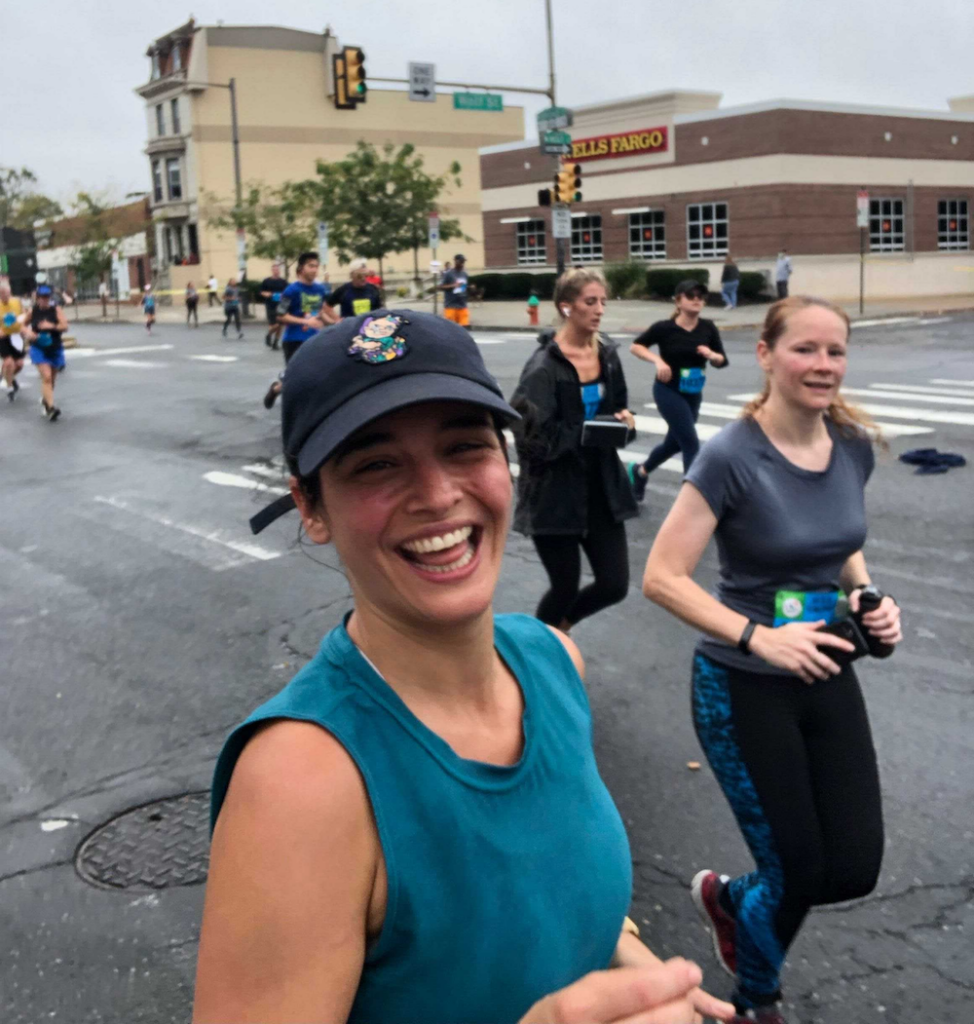
My crashes take been going on for five weeks since testing negative. They seem like they're getting better, slowly, equally a effect of diligent rest and about cipher else. Probably — hopefully — I won't cease up amid the statistics that the studies I cited count as long COVID cases.
Just for those, like me, dealing with what I've started thinking of every bit "medium" COVID, the ongoing issues yet affect our lives. I can't work out, be too social, drink, or stay up much by 9:30pm. I wish I'd been more enlightened that an outcome like this was more than a remote possibility.
Despite it being my job to know lots about COVID infections, I was simply not prepared for a weeks-long recovery process. If I hadn't started talking to other people who dealt with ongoing fatigue, I would take about certainly just tried to push through it. I tried to, at kickoff — as I said, I'm active and otherwise salubrious, and I've willed myself out of a lingering disease before. Just this is not a run-of-the-mill illness, and approaching information technology that fashion would have very likely prolonged the recovery process.
That'south why Abramoff said it's important to monitor your body and respond accordingly, no affair how mild an initial infection was.
"It's something that could impale somebody who'due south in their 70s, it'due south the aforementioned thing in your body," he said. "It's not zilch."
Source: https://whyy.org/articles/how-long-does-it-take-to-recover-from-covid/
Posted by: mcculloughbefor1969.blogspot.com
0 Response to "How Long Dose It Have To Be A Make Up Person How Long Does It Have To Be A Makeup Person"
Post a Comment